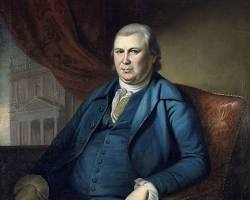
Robert Morris is often remembered as one of the most influential figures in early American history. Known as the “Financier of the American Revolution,” he played a crucial role in funding the war effort, shaping the U.S. economy, and contributing to the country’s path toward independence. While not as widely recognized as George Washington or Benjamin Franklin, Morris’s financial genius was instrumental in sustaining the revolutionary cause.
Early Life of Robert Morris
Robert Morris was born on January 20, 1734, in Liverpool, England. At the age of 13, he moved to Maryland, where he began working in shipping and commerce. His sharp business sense quickly made him one of the wealthiest merchants in colonial America. This foundation in trade and finance prepared him for the monumental role he would later play in American history.
Role in the American Revolution
When the colonies declared independence in 1776, they faced a critical problem—funding the war. The Continental Congress had little power to raise money and relied heavily on loans, donations, and foreign support.
Robert Morris stepped in with his financial expertise and personal wealth.
His contributions included:
- Securing loans from European nations, particularly France and the Netherlands.
- Establishing the Bank of North America in 1781, the nation’s first central bank.
- Personally lending money to pay soldiers and purchase supplies.
- Using his credibility to restore faith in the struggling U.S. economy.
Without Morris’s interventions, the American army might have collapsed due to lack of funds.
Robert Morris and the U.S. Constitution
After the war, Morris served as a delegate to the Constitutional Convention of 1787. He strongly supported a strong federal government with powers to regulate commerce and taxation—ideas that became central to the new Constitution.
He was also one of the first U.S. Senators, representing Pennsylvania. His vision of financial stability laid the groundwork for future leaders like Alexander Hamilton, who admired Morris’s economic strategies.
click here slugify tool
Later Life and Challenges
Despite his success during the Revolution, Morris’s personal financial life eventually crumbled. He invested heavily in land speculation, hoping to profit from the nation’s westward expansion. Unfortunately, many of these ventures failed, leaving him in debt.
In 1798, Morris was imprisoned for debt—a harsh reality of the time. He spent three years in debtor’s prison before being released. His final years were marked by financial hardship, though his contributions to the nation remained undeniable.
Legacy of Robert Morris
Robert Morris is remembered as a man of both brilliance and flaws. His impact on American independence cannot be overstated, yet his later struggles serve as a reminder of the risks of speculation and overconfidence.
Key Achievements:
- Known as the “Financier of the American Revolution.”
- Helped establish America’s first national bank.
- Signer of the Declaration of Independence, Articles of Confederation, and U.S. Constitution.
- Mentor and inspiration to future financial leaders.
Comparison: Robert Morris vs. Alexander Hamilton
| Aspect | Robert Morris | Alexander Hamilton |
| Role in Revolution | Financier of war effort | Aide to Washington, later Treasury Sec. |
| Banking Contribution | Founded Bank of North America | Founded First Bank of the U.S. |
| Political Office | U.S. Senator from Pennsylvania | Secretary of the Treasury |
| Legacy | Financed independence, faced downfall | Built lasting financial system |
Conclusion
Robert Morris may not always be the first name that comes to mind when thinking about America’s founding fathers, but his contributions were vital to the country’s survival and success. As the “Financier of the Revolution,” he provided the funds that kept the army alive and laid the groundwork for the U.S. financial system. Though his personal life ended in debt and difficulty, Morris’s legacy endures as a symbol of both the promise and pitfalls of financial leadership in a new nation.
FAQs
What was Robert Morris theory?
He believed strong national finance and credit were vital for America’s independence.
What is Robert Morris famous for?
Robert Morris is famous as the “Financier of the American Revolution” for funding the war.
What was Robert Morris’s famous quote?
His noted quote: “No nation was ever ruined by trade.” showing his belief in commerce.
What did Robert Morris do for the Constitution?
He was a delegate at the 1787 Convention and a signer of the U.S. Constitution.
Related Queries
- Who was Robert Morris in American history, Why is Robert Morris called the Financier of the American Revolution, Robert Morris role in the U.S. Constitution, How did Robert Morris fund the Revolutionary War, What happened to Robert Morris later in life, Robert Morris contribution to American banking, Was Robert Morris a Founding Fatherr