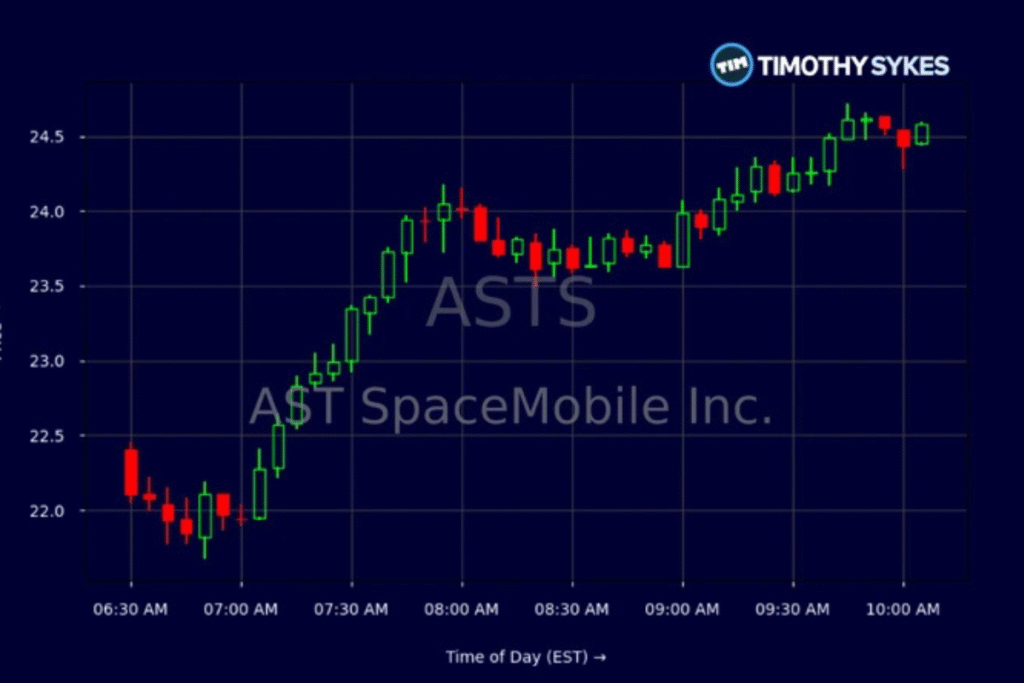
The headline “How Verizon Launched AST SpaceMobile Stock Into Space Today” captures the drama behind a transformative deal. In essence, Verizon’s announcement to partner with AST SpaceMobile sent asts stock soaring, marking a new phase in satellite-powered cellular connectivity and speculative investor momentum.
Verizon’s Game-Changing Partnership
Verizon recently disclosed a commercial agreement with AST SpaceMobile to integrate space-based cellular broadband into its network, beginning operations in 2026. This deal allows Verizon to extend its 850 MHz low-band coverage into remote and underserved regions by leveraging AST’s satellite infrastructure. The move elevates Verizon beyond terrestrial towers and into orbit-enabled connectivity.
News of the partnership triggered a sharp rally in the stock markets. asts stock jumped over 10–15% on the day of the announcement, reflecting investor excitement over the potential of satellite-to-smartphone technology merging with legacy carriers. The surge underscores just how much weight the market placed on Verizon’s endorsement.
Why the Market Reacted Strongly
Several factors combined to ignite enthusiasm for asts stock:
- Credibility boost: Verizon is one of the largest U.S. telecom operators. Its decision to back AST’s infrastructure reinforces confidence in AST’s technology and business model.
- Addressable market expansion: By tapping into remote geography and areas with limited coverage, AST and Verizon open new revenue corridors.
- First-mover advantage: Few companies can deliver direct-to-smartphone satellite service without special gear. AST’s ability to do so gives stock a tech edge.
- Momentum and narrative: In speculative sectors, stories carry substantial weight. The narrative that ordinary smartphones could connect via satellite resonates with retail and institutional players alike.
These ingredients combined to meme-like momentum, making asts stock a favorite among momentum-driven traders.
AST SpaceMobile’s Technology Deep Dive
AST SpaceMobile is not a speculative idea — it builds on tangible technology. The company designs satellites and a network architecture that allows standard unmodified smartphones to communicate directly with satellites in low Earth orbit. Its constellation, known as BlueBird, uses phased-array antennas that can beam cellular signals to devices.
As of recent updates, AST’s satellites operate across L-band and S-band spectrums, and integrate spectrum licensing from multiple mobile operators. The architecture is intended to complement terrestrial networks by seamlessly filling gaps in coverage. AST’s roadmap includes scaling to dozens of satellites and improving throughput, latency, and coverage density.
In earlier phases, AST had already collaborated with AT&T. The Verizon agreement now cements its shift into mainstream U.S. telecom infrastructure. As confidence and scale grow, asts stock may increasingly be viewed not just as a speculative satellite play but as critical infrastructure.
click here for slugify tool
Risks and Volatility Around ASTS Stock
While the upside narrative is compelling, asts stock is not without major risks:
- Execution risk: Delivering reliable satellite-to-phone service is complex. Delays in satellite launches, regulatory hurdles, or technical failures could backfire.
- Capital intensive: Building and maintaining a constellation demands huge capital. Burn rate and dilution risks are real.
- Dependence on partners: AST relies on telecom carriers (like Verizon) to bring end users and spectrum. If partnerships falter, asts stock would suffer.
- Competitive pressure: Rivals like SpaceX (Starlink) or other satellite entrants might contest the same market opportunity.
- Regulatory and spectrum challenges: Licensing across countries, spectrum allocations, and coordination remain sensitive.
Given these uncertainties, asts is likely to remain volatile, with big swings on both good and bad news.
What Investors Should Watch
If you are following asts stock, here are key signals to monitor:
- Satellite deployment progress: Milestones related to BlueBird launches, unfolding antennas, and operational coverage will validate AST’s execution.
- Verizon integration updates: When Verizon starts rolling out service under the new agreement, it will test real-world feasibility.
- Revenue recognition and ARPU (average revenue per user): How AST monetizes connectivity, service charging, and margins will dictate financial sustainability.
- Funding rounds or dilution events: Any announcements of new fundraising or issuance of equity/debt may influence asts performance.
- Competitive or regulatory shifts: Moves by rival satellite operators or regulatory constraints on spectrum use can change the landscape for stock.
Broader Implications for Telecom and Space
Verizon’s deal with AST signals a turning point: satellite-based connectivity is becoming a serious supplement to terrestrial networks, not just a futuristic idea. If AST’s technology scales, it might reshape how telecom networks are architected, integrating space and ground seamlessly.
For the space industry, this deal validates commercial demand for direct-to-smartphone capability. Investors will watch how satellite operators, launch providers, and spectrum regulators adapt to this evolving ecosystem. Meanwhile, asts stock becomes not just a satellite play but a touchstone for the macro trend of merging space with everyday communication.
Conclusion
The headline “How Verizon Launched AST SpaceMobile Stock Into Space Today” captures more than a price pump — it reflects a meaningful strategic pivot. Verizon’s bet on AST SpaceMobile has transformed asts stock from a speculative satellite name into a company with serious infrastructure backing.
Yet optimism must be tempered with realism: scaling satellite-to-phone service is incredibly hard, capital intensive, and dependent on both technological execution and industry cooperation. The rewards could be substantial if AST delivers on its vision, but the path is narrow.
For now, asts is a high-risk, high-reward bet at the frontier of telecommunications and space. Investors with a stomach for volatility may find value in its mission — especially as more coverage, proof points, and revenue begin to validate the excitement surrounding this once-unthinkable connectivity paradigm.
FAQs
What is asts stock?
Its is AST SpaceMobile’s NASDAQ-listed satellite communication company.
Why did asts stock rise?
Its rose after Verizon partnered with AST SpaceMobile for satellite service.
Is asts stock worth buying?
Its offers growth potential but carries high risk and volatility.
What drives asts stock growth?
New telecom deals, satellite launches, and global coverage boost it.
What’s next for asts stock?
Investors watch new launches, Verizon updates, and revenue growth for it.
Related queries
asts stock, AST SpaceMobile, Verizon partnership, satellite connectivity, space technology, telecom innovation, stock market news, satellite-to-smartphone, space economy, tech stocks, communication technology, wireless networks, 5G expansion, space industry, investor news, NASDAQ, ASTS analysis, satellite broadband, space-based internet, market trends